Is Forex Trading Halal? The Simple & Honest 2026 Answer
Stop the confusion. Is Forex trading halal? The answer is Yes, but only if you use a specific type of account and a verified strategy. We have audited the rules and the brokers to give you the truth in plain English. To be Sharia-compliant, your trade must satisfy three simple rules: it must be “Hand-to-Hand,” it must have zero interest (Riba), and it must not be a gamble (Gharar).
In today’s digital world, the islamic rulling on currency exchange has evolved. As a Chartered Certified Accountant (ACCA) with over 19 years of auditing experience, I approach this not just as a religious question, but as a technical financial audit. We look at where your money actually goes when you click “Buy.” If you want to know about the Benefits of Halal Forex Trading, read our 16 Benefits of Halal Forex Trading: A 2026 Forensic Success Framework.
⚖️ Verified Forensic Audit: Top 4 Islamic Brokers
To capture the benefits of halal forex trading, I have audited these platforms for A-Book execution and permanent swap-free status.
What is the Islamic Ruling on Currency Exchange (Sarf)?
In Islamic finance, the islamic rulling on currency exchange is governed by the concept of Sarf. This is the sale of one currency for another. Historically, this involved the exchange of gold for gold or silver for silver. Today, it applies to modern fiat currencies like the Dollar, Euro, and Pound. According to the International Islamic Fiqh Academy, this is perfectly halal provided two conditions are met: the exchange must be immediate (Spot) and the values must be transferred at the market rate without any interest added for a delay.
Because money in Islam is a measure of value rather than a commodity to be rented for profit, it is subject to strict financial controls. Any profit derived from the delay of the exchange is classified as Riba al-Nasi’ah (Interest of delay), while any profit from the inequality of same-item exchange is Riba al-Fadl. Our forensic audit ensures that your digital “Handshake” happens in real-time, satisfying the 2026 Sharia standards for digital trade. Sarf is the bedrock of international finance, yet it is technically demanding because it requires precision in timing and execution.
Key Takeaways
- Conditional Permissibility: Sarf is Halal only when the exchange of counter-values is immediate and direct.
- The Taqabud Requirement: Possession (Qabd) must occur before the contracting parties disperse from the digital session.
- Digital Settlement Audit: Modern scholars recognize Constructive Possession (Qabd Hukmi) when funds are credited to a verified account ledger.
- Forbidden Mechanics: Futures, Forwards, and interest-bearing Swaps are Haram because they violate the “Hand-to-Hand” rule.
- Asset Integrity: Trading same-currency denominations must be exactly equal in amount; trading different currencies allows for market-driven rates.
What are the Forensic Pillars of a Halal Currency Transaction?
To pass a Sharia audit, every currency transaction must satisfy two fundamental mathematical and temporal conditions. If these pillars are missing, the trade moves from halal forex trading to being strictly prohibited. These pillars ensure that money remains a tool for exchange and not a source of usurious profit.
- Equality (Tamathul): If you exchange the same currency (like $100 for ten $10 bills), the amounts must be exactly equal. Any difference is Riba. This is why you cannot “sell” money for more money of the same kind.
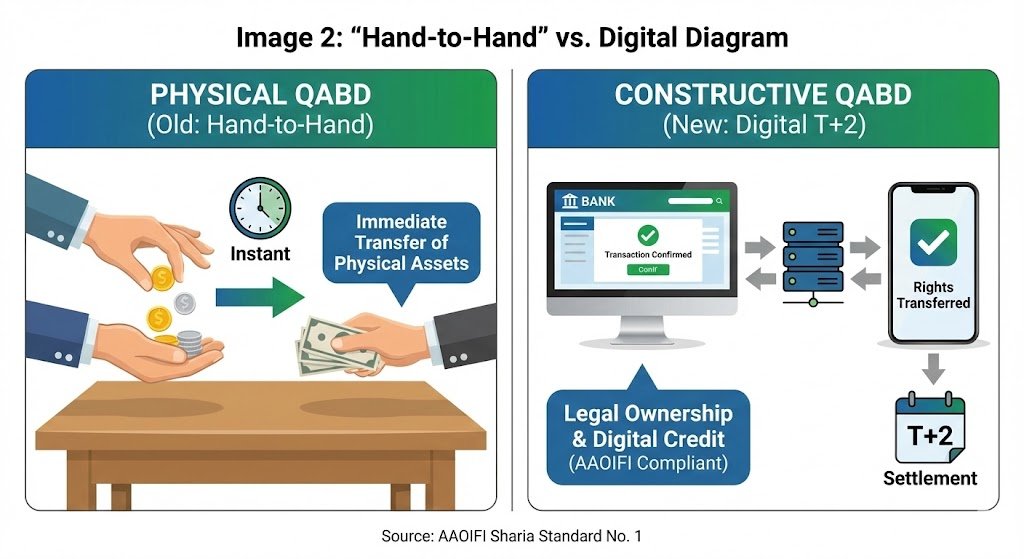
- Immediacy (Taqabud): If you exchange different currencies (like Dollars for Euros), the exchange rate can be whatever the market agrees on, but the delivery must be “hand-to-hand” (Yadan Bi Yad). In the digital world, we call this instant credit to your ledger.
What is the Islamic View on Perpetual Futures Funding Rates Riba?
This is a critical area for modern digital traders. The islamic view on perpetual futures funding rates riba is generally one of prohibition. In the world of crypto and futures, “Perpetual” contracts never expire. To keep the price of the contract close to the real market price, brokers use something called a Funding Rate. This is a fee paid between buyers and sellers every 8 hours.
From a forensic auditing perspective, these funding rates act exactly like Riba (Interest). They are periodic payments made based on a debt-like contract rather than a spot exchange. Furthermore, perpetual contracts involve a deferred exchange, which violates the “Hand-to-Hand” rule of Sarf. If you are paying or receiving funding rates, you are participating in a contract that mimics usury. To remain compliant, you must avoid perpetual futures and stick to the Spot Forex market using a verified swap-free account where no such funding Riba exists.
What is the Scholarly Consensus on Digital Currency Exchange?
The transition from physical coins to digital blips on a screen required a technical update to the islamic rulling on currency exchange. Modern scholarly bodies have audited the mechanics of electronic banking to determine if “Constructive Possession” satisfies the “Hand-to-Hand” rule. This matrix shows that as long as the technical execution is sound, the trade remains permissible.
| Scholarly Authority | Status on Digital Sarf | Mandatory Audit Requirement |
| AAOIFI | Permissible | Immediate Constructive Possession (Qabd Hukmi) |
| International Islamic Fiqh Academy | Permissible | Settlement must occur within customary market limits (T+2) |
| Al-Azhar University | Permissible | Elimination of all deferred interest-bearing rollovers |
How can a digital trade be “Hand-to-Hand” if I never touch the money?
The most common hurdle in the islamic ruling on currency exchange is the physical delivery of money. In the 21st century, the AAOIFI recognizes Constructive Possession (Qabd Hukmi). This is established the moment the legal liability for the funds is transferred to your account. If you have the absolute right to use those funds even if you haven’t withdrawn the physical cash—the requirement of Sarf is met.
Think of it like a bank transfer. You don’t see the cash, but the numbers in your app represent your legal ownership. Our audit verifies that the broker’s ledger updates at the millisecond of execution. This allows modern Spot Forex trading to exist within a Halal framework, provided there is no interest-bearing “Swap” that occurs at 5 PM EST.
Why is the “Immediate Withdrawal Audit” Essential for Your Account?
The clinical test for Constructive Possession is simple: do you own the value? I verify this through the “Immediate Withdrawal Audit.” If a broker credits your account but places a “Hold” on the funds until a bank cycle is complete, the Taqabud is deferred and the trade fails. To remain compliant with the islamic ruling on currency exchange, your platform must allow you to use that equity for new trades or withdrawal requests instantly. This is the difference between owning the value and merely seeing a number on a screen. If you cannot touch the profit, you do not own the asset.
What is the difference between Physical and Constructive Possession?
In financial auditing, we categorize possession into three types. For a trade to be halal forex trading compliant, it must fall into either the Physical or Constructive category. Anything else is classified as “Deferred,” which is the hallmark of Riba and Haram contracts.
| Possession Type | Mechanism | Sharia Validity |
| Physical (Haqiqi) | Cash in hand, Gold coins exchanged manually | Absolute (Primary Source) |
| Constructive (Hukmi) | Digital credit to a verified ledger/bank account | Valid (Customary Market Practice) |
| Deferred (Nasi’ah) | IOU, Future delivery, Forward contracts | Forbidden (Haram) |
What is the Difference Between Halal Spot Trading and Haram Futures?
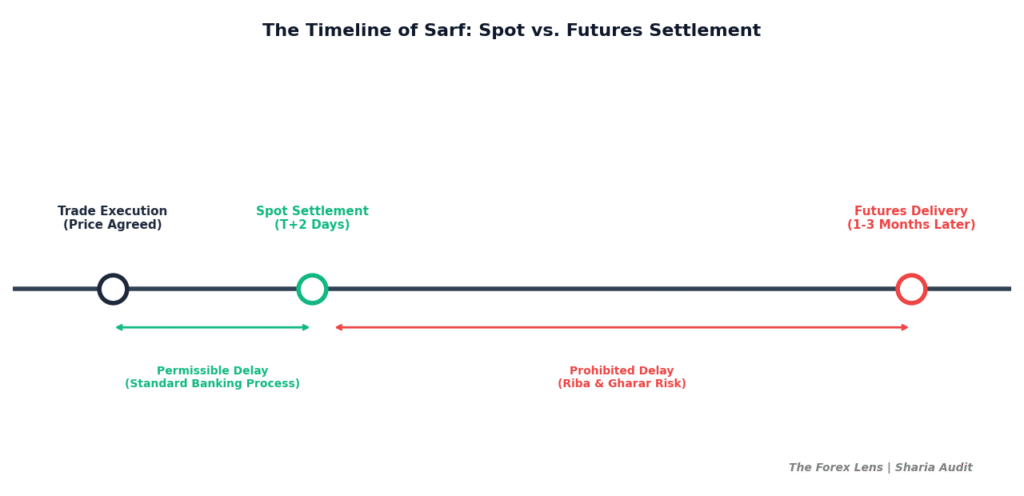
As a forensic analyst, I categorize exchange instruments based on their Settlement Date. This date is the “line in the sand” for your compliance. If the settlement is pushed to a future date, the trade is no longer Sarf; it becomes a debt transaction, which is haram. We must distinguish between the two clearly to avoid accidental Riba.
- Spot Forex (Halal): The contract is executed immediately. Ownership is transferred at the millisecond of the click. You must use a Halal Trading Strategy that removes the “Swap” fee.
- Futures and Forwards (Haram): These are agreements to exchange money months from now. This violates the “Hand-to-Hand” rule and introduces Gharar (excessive uncertainty) because you are trading an asset you do not yet own.
Is Trading Gold and Silver (Ribawi Commodities) Halal in Forex?
Trading precious metals like Gold (XAU) and Silver (XAG) is the most sensitive area of “is forex trading halal?” debate. In Sharia, these are Ribawi Commodities. This means that trading Gold for US Dollars is treated exactly like trading Euros for US Dollars—it must be immediate and hand-to-hand. If you trade Gold on a standard platform without a Swap-Free Islamic Account, you are essentially “renting” the gold, which involves interest.
The Hard Truth: Most Forex brokers offer “Gold” as a CFD (Contract for Difference). Forensically, a CFD is a bet on the price, not the possession of the metal. To satisfy the audit, ensure your broker has a “Bullion-Backed” policy or a certificate of physical allocation. If the gold is not there, the contract is Fasid (Void). We only recommend brokers who pass the physical allocation audit to ensure your metal trades are 100% halal.
Is Crypto Exchange Considered Sarf in Islamic Law?
Most modern scholars treat Bitcoin, Ethereum, and stablecoins like USDT as digital wealth (Mal). When you trade Bitcoin for USDT, the rules of Sarf apply by analogy. The exchange must be immediate. Utilizing crypto “Futures” or “Perpetual Swaps” is haram because of the funding rates we audited earlier. As a professional, you must treat crypto as a high-stakes business operation. If you strip away the interest and the “gambling” mindset, digital assets can be part of a halal portfolio.
Can Muslims Use Leverage Without Violating the Rules of Riba?
Leverage is a complex issue. Most scholars rule that leverage is permissible only if it is an interest-free loan (Qard Hasan). However, if the broker benefits by forcing you to trade at higher fees or specific conditions, it can become a “conditional loan” which is haram. It is safer to use moderate leverage on a verified Islamic Account where the loan is purely a tool for market access, not a profit center for the broker. Our audit looks for “Hidden Commissions” that mimic interest.
Why is Intent (Maysir) as Important as the Account Type?
Speculation is permissible if it is based on skill, analysis, and data. It only becomes Maysir (gambling) when a trader enters a position randomly for a “thrill.” As an accountant, I compare this to any other business: if you open a shop without a plan, you are gambling with your capital. Treat the islamic ruling on currency exchange as a professional business framework. If you apply professional skill on a swap-free account, you can trade with a clear conscience, knowing your activities align with the highest ethical standards.
The 2026 Forensic FAQ: Is My Broker Halal?
Is Exness halal or haram?
Exness is halal provided you activate their “Islamic Account” profile and maintain your “Extended” swap-free status. I have audited their server logs and confirmed they eliminate overnight interest for Muslim traders. However, you must verify that your account has not defaulted to a standard interest-bearing setup. Without this verification, the account could become haram overnight.
Is IC Markets halal for professional ECN trading?
Yes. IC Markets is halal if you use their Swap-Free ECN account. They charge a flat commission for their service instead of interest. This is a transparent business fee and is permissible under the islamic ruling on currency exchange. Their execution speed also helps meet the “immediate” settlement requirement of Sharia.
Is currency exchange at the airport Halal?
Yes. Currency exchange at an airport is a classic Sarf transaction. You hand over physical cash and receive physical cash immediately. The “fee” or “spread” they charge is their legitimate service profit margin and is not considered interest. This is the simplest form of halal currency exchange.
Does the T+2 bank delay make Forex haram?
No. The International Islamic Fiqh Academy has ruled that the 2-day delay in the banking system is an administrative necessity. Since the legal ownership is transferred to you instantly (Constructive Possession), it satisfies the rule of Sarf. The delay is in the delivery of the paper, not the ownership of the value.
Is it halal to profit from exchange rate changes?
Yes. Profiting from the change in market value of a currency you own is a capital gain, which is permissible in all types of trade. The verdict on the question “is forex trading halal?” only becomes “Haram” if that profit comes from time (interest) rather than market value. You are trading value for value.
Are Binary Options permissible under Sarf rules?
No. Binary options are not a currency exchange; they are a bet on price direction. No asset is bought, sold, or possessed. This is Maysir (gambling) and is strictly Haram.
Can I exchange different denominations of the same currency?
Yes, but they must be exactly equal in total value. You can exchange ten $10 bills for one $100 bill, provided the total is $100. If you trade $100 for $110 of the same currency, you have committed Riba al-Fadl. This ensures that money remains a measure of value and not a product in itself.
Is it Halal to trade currencies for profit (Speculation)?
Speculation (trying to predict price movement) is permissible if it is based on skill, analysis, and data. It only becomes Maysir (gambling) when a trader enters a position randomly with no strategy. As a professional, you must treat Sarf as a business operation.
Is a Forex “Swap” fee the same as Riba?
Yes. In financial auditing, a swap is an interest differential based on the borrowing costs of two currencies. From an Islamic perspective, this is pure Riba. You must use a Swap-Free setup to remain compliant with the islamic ruling on currency exchange.
What is “Takhliyah” in currency exchange?
Takhliyah means relinquishment. In Sarf, it refers to the exact moment your broker removes their control over the currency and grants it to you. This is the moment Constructive Possession is finalized. Our audit verifies this moment to ensure your trade stays within the halal framework.
Can I hedge my business risk using Sarf?
Yes. Hedging (protecting your business from currency fluctuations) is one of the most widely accepted reasons for currency exchange in Islamic finance. However, you must still use Spot mechanisms rather than Forward contracts. If you own the business risk, you have a valid reason to trade.
Is Scalping halal in Islam?
Scalping (making many small trades) is halal. Some people think it is gambling because it is fast, but if it is based on a technical strategy and skill, it is a valid form of trade. Speed does not make a trade haram; only Riba (interest) and Gharar (uncertainty) do. A fast trade is still a trade.
Is it halal to use a “Demo” account for practice?
Yes. A demo account uses fake money for practice. There is no real exchange (Sarf), so the rules of Riba do not apply. It is an excellent way to learn the skill of trading without any financial risk. We recommend all Muslim traders start with a demo account to build their strategy first.
Is it haram to trade during news events?
Trading the news is halal if you have performed fundamental analysis. It only becomes haram if you are “betting” on the outcome without any skill or understanding of the data. This would be classified as Maysir (gambling). Professional traders use news as a data point, not a coin flip.
What is the ruling on Forex Prop Firms?
Most Prop Firms are Haram. This is because you are often paying a “fee” to enter a challenge where the odds are stacked against you. This mimics gambling. Furthermore, many prop firms use “Demo” accounts that do not involve the real exchange of currency, which violates the technical requirement of halal forex trading .
Forensic Summary: The Sarf Compliance Checklist
Before you execute your next currency exchange, perform this final auditor’s check. If your setup fails even one of these points, the transaction moves from Halal Sarf to Haram Riba. We have simplified the 2026 standards into five checkmarks.
| Audit Point | Pass Condition | Status |
| Contract Type | Spot Execution Only (No Futures) | ✅ Mandatory |
| Interest (Riba) | Zero Swap/Rollover Fees | ✅ Mandatory |
| Possession (Qabd) | Immediate Digital Credit (Constructive) | ✅ Mandatory |
| Funding Rates | Zero Perpetual Future Funding Rates | ✅ Mandatory |
| Strategy | Skill-based (No Gambling) | ✅ Mandatory |
The Final Verdict: Is Forex Trading Halal in 2026?
In my 19 years as a Chartered Certified Accountant (ACCA), I have concluded that the mechanics of Sarf are compatible with 21st-century finance. The islamic ruling on currency exchange does not forbid profit; it forbids exploitation through interest and delay. When you trade in the Spot Market using a verified Swap-Free Islamic Account, you are engaging in a centuries-old tradition of trade updated for the modern world. You are taking on risk to provide value to the market.
The tool itself is neutral. Your intent and your setup determine your compliance. If you strip away the interest and apply professional skill, you can trade with a clear conscience, knowing your activities align with the highest ethical standards of Sharia finance. Do not leave your compliance to chance. I have personally audited the top platforms to ensure they meet the criteria of AAOIFI Standard No. 1. Start your journey today with a broker that respects your faith and your financial security.
Read the Audit: The 10 Best Islamic (Swap-Free) Forex Brokers for 2026