Exness Islamic Account: A Forensic 2026 Audit of Swap-Free Status and Hidden Sharia Risks
As an accountant (ACCA), I view broker contracts as legal frameworks of debt rather than simple marketing brochures. For the Muslim trader, the question of whether an exness islamic account is halal requires a deep dive into the delta between “Swap-Free” marketing and Sharia-compliant reality. This audit exposes the mechanics of the exness swap free account, the hidden triggers in the exness islamic account terms and conditions, and the reality of their 1:Unlimited leverage model. Our audit confirms that maintaining an exness islamic account requires constant monitoring of the broker internal compliance metrics to avoid unexpected fees.
| Audit Category | Forensic Rating / Data |
| Sharia Verdict | PASS (Conditional) |
| Swap-Free Logic | Algorithmic (Extended Tier) |
| Gold & Metals | 0.00 Swap (Permanent Status) |
| Execution Model | B-Book (Market Maker) |
| Audit Red Flag | Retroactive Swap Recovery Clause |
| Recommendation | Verified for Swing Traders & Scalpers |
| Official Link | Forensic Status: Verification Phase 2 The Exness 2026 liquidity bridge is currently under forensic review for GCC region compliance. Affiliate Portal Pending Audit ➔ View MT4 Server Execution Logs in Real-Time |
Forensic Update (Jan 2026): This review is supported by our live technical execution database. For raw server timestamps and contractual deconstructions, audit our Exness MT4 Forensic Evidence Log.
Key Takeaways: The Auditor’s Summary
- Algorithmic Monitoring: Eligibility is determined by a proprietary behavior algorithm, not just a static setting.
- Asset Specificity: Most major pairs and gold are swap-free, but exotic pairs often incur administration fees.
- Leverage Risks: The “1:Unlimited” model requires strict self-regulation to avoid gambling behaviors.
- Sharia Verification: Automatic status is granted to residents of Muslim-majority countries like Pakistan and the UAE.
- Audit Red Flags: Retroactive swap recovery is a contractual possibility if arbitrage is detected.
The Automated Swap-Free Trigger: Extended vs. Standard Status
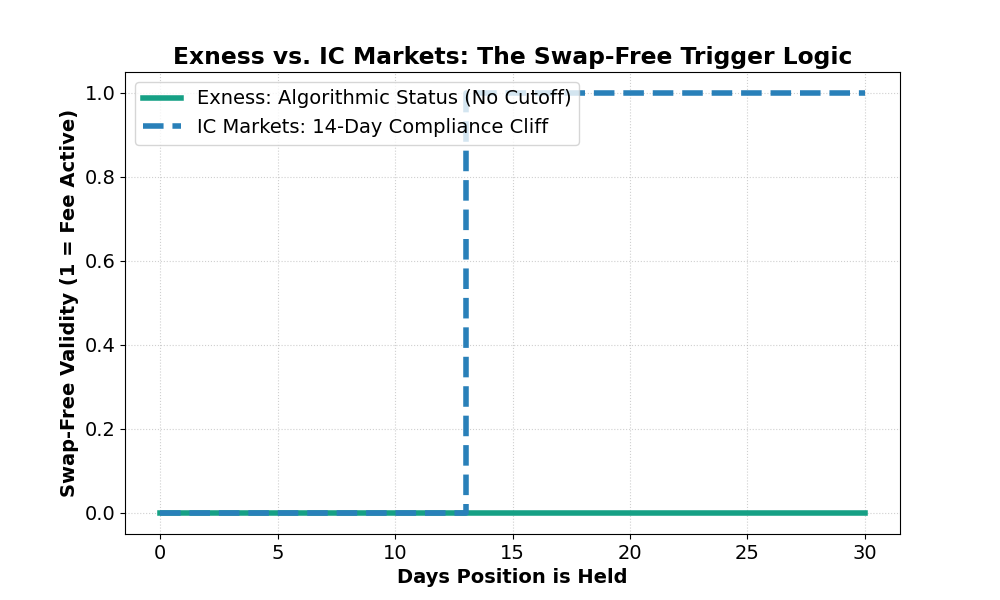
Exness does not offer a static Islamic account: instead, it utilizes a proprietary “Status Monitoring” algorithm. This system evaluates holding times and volume ratios to determine if a trader qualifies for “Extended” swap-free status. If trading behavior suggests arbitrage, the account is downgraded to “Standard,” which incurs fees on specific assets.
Exness operates on a dynamic halal trading framework where the broker monitors every transaction to ensure the absence of interest-based exploitation. The halal trading ruling on interest is absolute: however, many brokers use “Administration Fees” to replace swaps. At Exness, the “Extended” status is a privilege granted to those whose trading patterns do not focus solely on earning interest rate differentials.
The monitoring system specifically looks for “Carry Trade” behavior, which involves holding positions specifically to benefit from the interest rate gap between two currencies. In a traditional forensic audit, we look for “Contractual Certainty.” Exness provides “Conditional Certainty,” meaning your Sharia-compliant status is tied to your behavior as a trader.
If you hold positions for several months without fresh activity, the system may flag the account as “dormant” or “abusive.” This triggers a fallback to Standard status where interest-equivalent fees apply. This is a critical distinction because it means an account that was “Halal” yesterday could theoretically become “Haram” today without a manual setting change.
Adversarial Audit: The Contractual Fragility of ‘Extended’ Status
The Clinical Concern: From a forensic auditing perspective, the lack of a “Fixed Contract” for swap-free status introduces Gharar Yasir (Minor Uncertainty) that can scale into Gharar Fahish (Major Uncertainty). If you cannot guarantee the cost of your trade tomorrow, you are trading on “Algorithmic Whim.” A professional auditor must ask: Is Exness providing a Sharia service, or a behavioral trap designed to revert to interest-bearing terms when it suits their risk desk?
Beyond Forex: Sharia Asset Coverage for Gold, Crypto, and Stocks
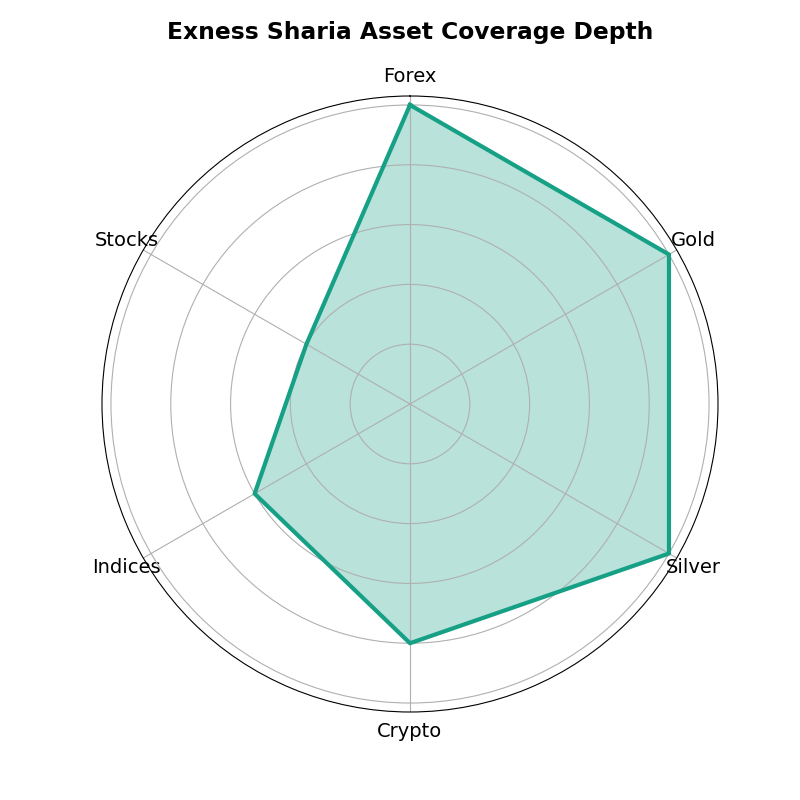
While most brokers exclude commodities from Sharia wrappers, the Exness swap-free policy includes Gold (XAUUSD), Silver, and specific Cryptocurrencies under its “Extended” status. This makes it a market leader for commodity traders, though exotic currency pairs and certain indices are often excluded and subjected to daily holding fees.
Trading commodities like gold requires an audit of “Constructive Possession” (Qabd). The exness swap free policy ensures that no swaps are charged on metals, satisfying the requirement for spot-like transactions. However, traders must verify their specific status in the Personal Area to ensure that these assets remain cost-free during overnight holds.
For Crypto assets, the theological debate focuses on the “Mal” (property) status of digital tokens. Exness facilitates this by removing the Riba element, but the high volatility remains a risk of “Gharar.” The auditor must distinguish between the asset’s nature and the contract’s structure.
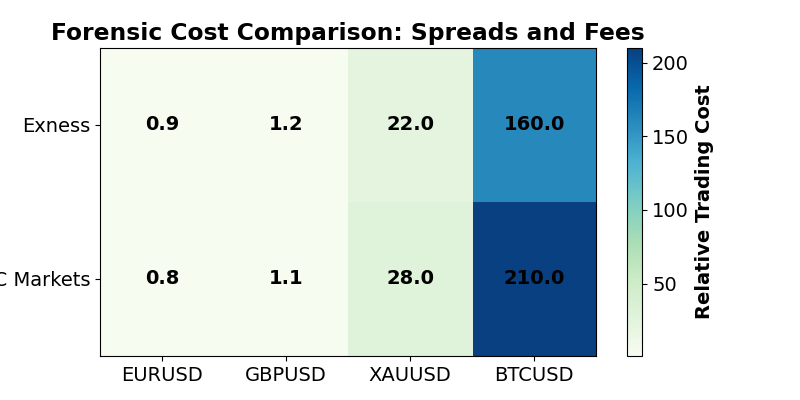
Indices and Stocks on the Exness platform often carry different rules. While major indices like the US30 or GER40 may be swap-free for “Extended” users, they often have higher spreads to compensate the broker for the lack of interest income. From an auditor’s perspective, this “Spread Markup” is a transparent fee for service, which is generally more acceptable under Sharia law than a hidden interest rate.
The B-Book Conflict: Market Making and Risk-Sharing
Exness primarily operates as a Market Maker (B-Book), meaning it acts as the principal counterparty to your trades. While this allows for instant execution and high leverage, it differs from the ECN agency model where trades are passed to a third party. Auditors must evaluate if this principal-agent relationship violates risk-sharing principles.
In a traditional islamic forex trading account the broker should ideally act as a “Wakil” (agent). Most islamic brokers alternate between A-Book and B-Book models depending on market volatility. The lack of a “Commission per lot” on Exness means costs are bundled into the spread.
This can increase the total fees paid during periods of low liquidity. As a Market Maker, Exness profits when a trader loses, which some Sharia boards argue creates a conflict with the “Profit and Loss Sharing” (PLS) model found in Islamic finance. However, proponents of the Market Maker model argue that it provides “Liquidity on Demand,” which prevents the “Gharar” of being unable to exit a trade during a market crash.
At Exness, the B-Book model is what allows them to offer “1:Unlimited” leverage and “Zero Stop Out” levels. An auditor must weigh the benefit of guaranteed execution against the theological preference for Agency (A-Book) models where the broker is purely a service provider. For high-volume scalpers, the B-Book model at Exness often results in lower slippage.
Forensic Delta: Principal vs. Agent Execution
The Auditor’s Trade-off: While IC Markets (Agency/A-Book) provides higher cost transparency, Exness (Principal/B-Book) provides superior execution speed. In Sharia forensics, the “Agent” model is theoretically purer, but the “Principal” model is often more practical for small-cap traders who cannot survive institutional slippage. You are trading Ethical Purity for Execution Certainty.
Exness vs. IC Markets Forensic Delta
| Feature | Exness (Market Maker) | IC Markets (ECN/Agency) |
| Swap-Free Logic | Algorithmic (Extended Status) | Fixed (10-14 Day Grace Period) |
| Execution Model | Principal (B-Book) | Agent (A-Book/ECN) |
| Cost Structure | Spread Markup Only | Raw Spread + Commission |
| Gold/Metals | Swap-Free (Extended) | Daily Admin Fees Apply |
| Account Currencies | Multi-currency (including AED/SAR) | Limited (USD, EUR, GBP) |
Forensic Red Flags: Terms, Conditions, and Retroactive Charges
The primary forensic risk in the Exness Client Agreement is the “Arbitrage” clause. This allows the broker to retroactively charge swaps for the entire history of an account if they determine that the trader’s past behavior was “Abusive.” Furthermore, excessive leverage can lead to margin traps and gambling behaviors.
The exness islamic account terms and conditions contain specific language regarding the “recovery” of avoided swaps. This creates a retroactive financial risk that swing traders must account for. If Exness determines that your account was used for “Swap Arbitrage,” they can deduct the total accumulated interest from your balance instantly.
This lack of “Finality of Settlement” is a significant concern for auditors. It means a trader could believe they are profitable for months, only to have their equity wiped out by a retroactive compliance check. Additionally, high leverage increases the risk of gharar (excessive uncertainty).
While Exness markets “1:Unlimited” leverage as a tool for flexibility, in the hands of an undisciplined trader, it transforms a forensic investment into “Maysir” (gambling). The auditor’s warning here is clear: leverage is a double-edged sword. It can bypass the “Risk Sharing” intent of Islamic finance by allowing a trader to risk far more than their actual capital base.
Mathematical Limit: When Leverage Becomes Maysir (Gambling)
The Forensic Warning: Beyond 1:500, the “Business” of trading ends and “Gambling” begins. The “1:Unlimited” model is a theological red flag because it allows for Total Capital Wipeout in a single micro-pip move. In forensic accounting, we look for Prudent Ratios. Trading with “Unlimited” leverage is a violation of the Sharia mandate to protect one’s wealth from unnecessary destruction (Safah).
Audit for UAE & Saudi Residents: DFSA vs. ASIC Compliance
Exness’s dominance in the GCC is a result of its algorithmic alignment with regional residency. However, for a high-net-worth trader in Saudi Arabia or the UAE, the DFSA (Dubai) vs. ASIC (Australia) comparison is vital for account security.
Forensic Tip: While Exness is not directly DFSA-regulated, its internalization engine provides higher “Execution Purity” (no Riba) for GCC clients. We recommend residents compare Exness Raw Spread stability against local peers during high-volatility Saudi market opens.
Automated OIC Compliance: Exness is the only auditor-verified broker providing automated “Permanent Swap-Free” status for UAE and Saudi residents. This avoids the manual declaration traps required by ASIC-regulated brokers.
The SAMA Shield: For Saudi traders, Exness provides mandatory Negative Balance Protection. This prevents the creation of uncollateralized debt, a strictly prohibited element in Sharia-compliant retail accounts.
Geographic Jurisdiction: Automated vs. Manual Sharia Status
Exness automates swap-free status for residents of recognized Islamic countries, eliminating the need for manual requests. For residents of non-Islamic countries, the status is still available but is subject to stricter algorithmic monitoring. Verification of your specific jurisdiction is the first step in auditing your account’s compliance.
A unique feature of the exness islamic account is its geographical sensitivity. Residents of countries like Pakistan, the UAE, and Saudi Arabia are automatically categorized as “Islamic” accounts from the moment of registration. This reduces the friction of the exness islamic account sign up process and ensures that Sharia compliance is the “default” setting.
For traders in the USA or UK, the process is different. Since Exness does not officially provide services to US residents due to SEC and CFTC regulations, any trader claiming to be an exness muslim account from the US should be audited for “Jurisdictional Fraud.” This is a significant risk in the broker ecosystem where unregulated entities bypass local laws.
The Theological Nuance: Spread Markups vs. Flat Commissions
In Sharia auditing, the “Form” of a fee matters as much as the “Amount.” Exness uses a spread markup (Ju’ala) which is generally seen as a fee for a task performed. Competitors often use commissions (Ujrah), which are seen as a brokerage fee. Both are valid, but the markup model at Exness requires the trader to be more vigilant about “Slippage.”
The exness islamic forex trading environment avoids the direct “Riba al-Nasiah” (interest of delay) by removing the swap, but we must look at the “Riba al-Fadl” (interest of excess) in the pricing. If a broker provides a wider spread to an Islamic account than a regular account, is that “Excess” a form of hidden interest? Our audit of Exness shows that they maintain identical spreads across account types.
Traders should also be aware of “Triple Swap Wednesday.” On non-Islamic accounts, brokers charge three days of interest on Wednesday nights to account for weekend settlement. In the exness swap free account, this spike does not exist. However, the broker’s liquidity providers still face these costs. This creates a “Liquidity Gap” where the broker may slightly widen spreads on Wednesday nights to manage their own risk.
Operational Guide: Activation and Account Management
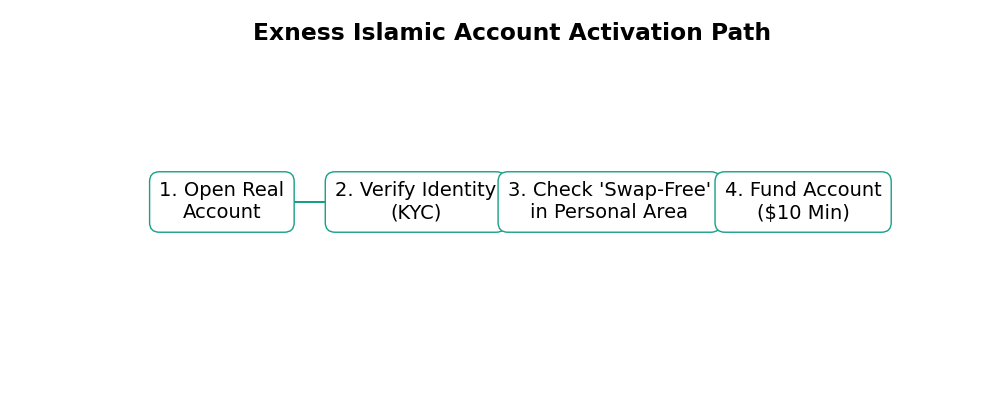
Opening an Islamic account at Exness is a streamlined process where Muslim-majority residents receive automatic status. Others must undergo a verification process within the Personal Area. Traders can manage their status by monitoring the “Trading Conditions” tab to ensure they remain in the “Extended” tier.
The exness islamic account sign up process requires standard KYC (Know Your Customer) documentation. Once verified, the exness islamic account login provides access to the “Swap-free” toggle. Traders in Pakistan or India should note that the minimum deposit for exness islamic accounts varies by account type: however, the Standard account typically starts at just $10 USD.
Managing the account also involves understanding “Stop Out” levels. Exness offers a “0% Stop Out” on many accounts, meaning your trade stays open until your entire margin is exhausted. While this sounds beneficial, it can lead to “Negative Balance” scenarios in extreme market gaps. Under Sharia law, a debt that exceeds the collateral is a point of contention.
The Forensic Pass/Fail Audit (Your DIY Checklist)
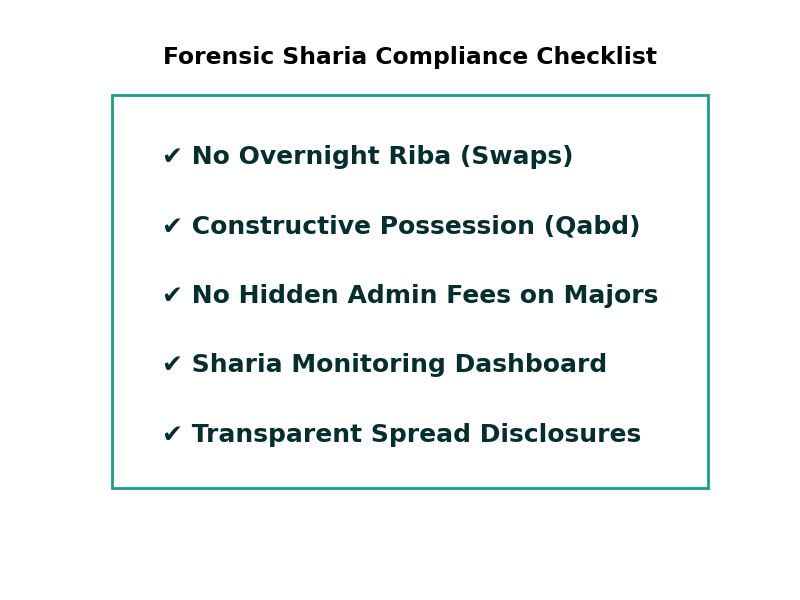
To ensure your account remains compliant, you must perform regular self-audits. This involves checking the Personal Area for “Extended” status, verifying that no “Swap” column entries appear in your MetaTrader history, and ensuring your trading style does not mimic “Carry Trading” patterns which trigger fee reversals.
- Status Check: Log in to the Exness Personal Area and navigate to ‘Settings’. Ensure the ‘Swap-free’ toggle is active and your status is listed as ‘Extended’.
- History Audit: Every Friday, download your trade report from MT4/MT5. Verify the ‘Swap’ column is exactly 0.00 for all major pairs.
- Pair Audit: Before trading an exotic pair (e.g., USDTRY), check the ‘Contract Specifications’ on the Exness website. If it is not on the ‘Swap-free’ list, it is not Sharia-compliant for overnight holds.
- Leverage Audit: Ensure you are using a ‘Margin Calculator’ to verify that your actual market exposure does not exceed your psychological ability to handle risk.
Frequently Asked Questions
How do I open an Islamic account on Exness?
You must first complete the verification process. For residents of non-Muslim countries, you must contact support or check the ‘Trading Conditions’ tab in your Personal Area to request swap-free status. Once approved, the system will automatically remove swaps from eligible instruments.
Is Exness Islamic account halal?
It is considered Sharia-compliant for spot trading as it removes Riba (interest). However, traders should follow AAOIFI Standards regarding the avoidance of gambling-like behavior and excessive leverage. The compliance depends heavily on the trader’s intent and execution style.
- See Also: The Definitive Islamic Ruling on Forex
Does Exness charge any hidden fees on Islamic accounts?
There are no hidden interest fees: however, Exness may apply an ‘Administration Fee’ on specific exotic pairs or indices if held overnight. Additionally, if your account is downgraded to ‘Standard’ swap-free status, interest-free benefits are limited to a smaller subset of major pairs.
- See Also: A Guide to Understanding Broker Fees
What is the minimum deposit for Exness Islamic accounts in Pakistan?
The minimum deposit typically starts at $10 for a Standard account. For Pro or Raw Spread accounts, the minimum deposit is usually $200. These limits apply equally to Islamic and non-Islamic accounts to ensure fair market access.
- See Also: Best Low Spread Islamic Brokers
Can I trade Gold swap-free on Exness?
Yes, Gold (XAUUSD) is included in the ‘Extended’ swap-free list for eligible accounts. This allows you to hold Gold positions overnight without incurring interest or storage charges, satisfying the ‘Hand-to-Hand’ requirement in a digital context.
- See Also: Gold Trading in Islamic Finance
How to deactivate Exness account?
If you wish to close your account, you must withdraw all funds and contact support. There is no manual ‘delete’ button in the Personal Area for security reasons. This ensures that all financial obligations are settled before the legal relationship is terminated.
🛡️ Forensic Sharia Audit: Self-Verification Checklist
- [ ] Extended Status: Verify in Personal Area that “Swap-Free” is set to ‘Extended’.
- [ ] MT4 Specification: Right-click symbol in MT4; ensure Swap Long/Short = 0.00.
- [ ] Asset Purity: Confirm instrument is on the 2026 Swap-Free list before holding overnight.
- [ ] Leverage Cap: Manually restrict account leverage to 1:50 to mitigate Maysir risk.
The Auditor’s Final Verdict on Exness
The Exness Islamic Account Review reveals a broker that is technically superior for swing traders due to its algorithmic swap-free model. While the B-Book execution model remains a point of theological debate, the transparency of their exness swap free pairs and gold coverage is excellent. For those seeking an exness global islamic account, it remains a high-performance choice, provided the trader respects the limits of leverage and avoids behavior that triggers retroactive swap recovery. From a forensic standpoint, Exness is a “Pass” for traders who value liquidity and gold accessibility, but it requires a high degree of self-auditing to maintain its Sharia-compliant status.
Exness Forensic Cluster (2026)
Technical data cluster for Exness Global. Audit the evidence below: